Suffolk contractor sees fuel and productivity gains with Fendt 726
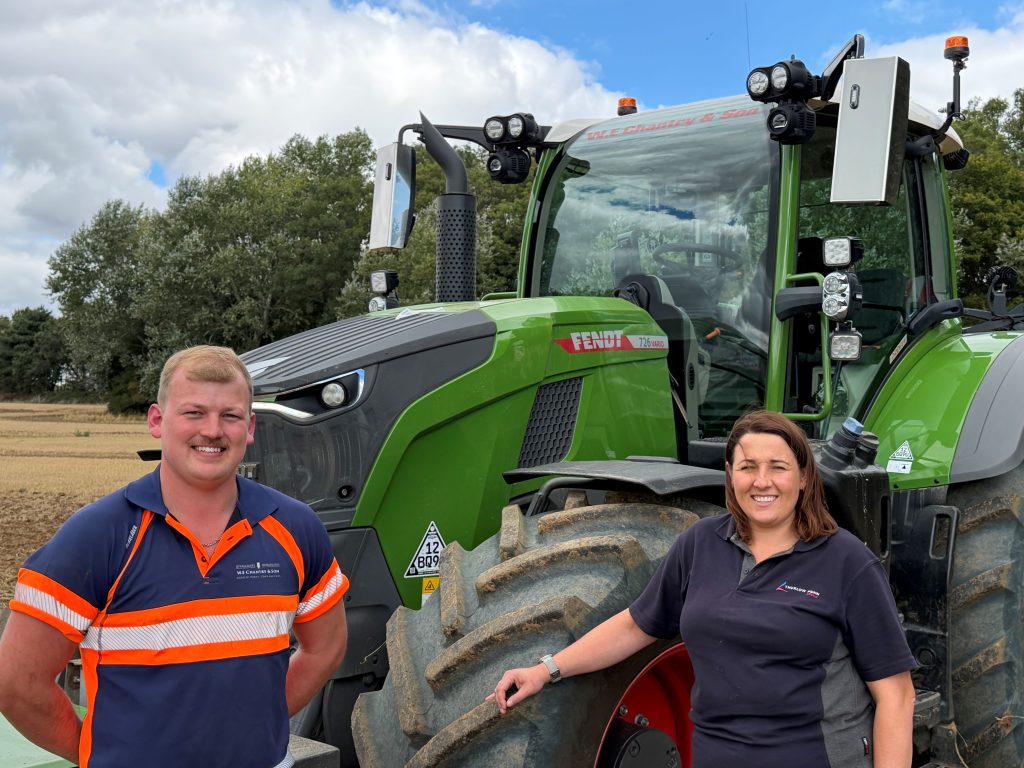
Fendt 726 delivers fuel savings and output gains for Suffolk contractor
A Suffolk contracting business says its move to Fendt has quickly delivered lower fuel use, higher work rates and a more comfortable working environment than the tractor brand it operated previously.
Trading as W E Chantry & Son and based at Saxmundham, the Chantry family provides general farm contracting services across Suffolk and south-east Norfolk. The company provides tractor-with-driver hire using customers’ own implements, but increased demand for a complete service has led to investment in a growing fleet of modern arable implements including trailers, cultivation machinery and a new drill that joined the equipment line-up this year.
The operation is run by Oliver (Olly) Chantry with his father, Rupert, and uncle, Adam. The family also farms its own land. Most is down to grass used for grazing 400 breeding ewes and store lambs, with Adam taking primary responsibility for the sheep enterprise.
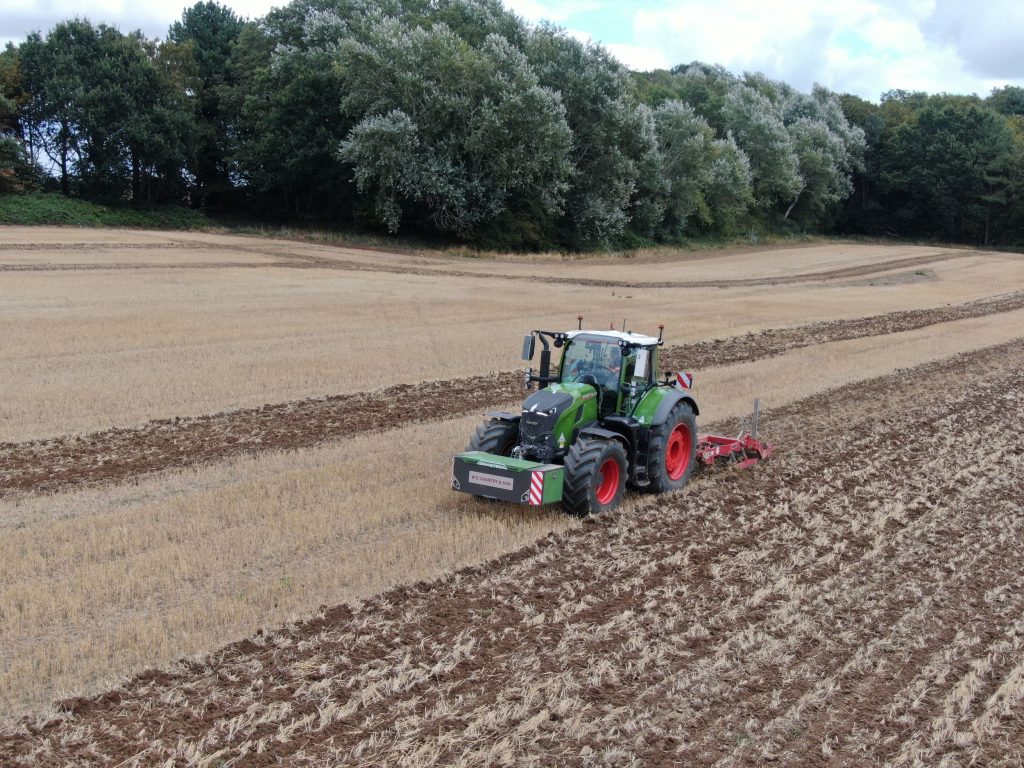
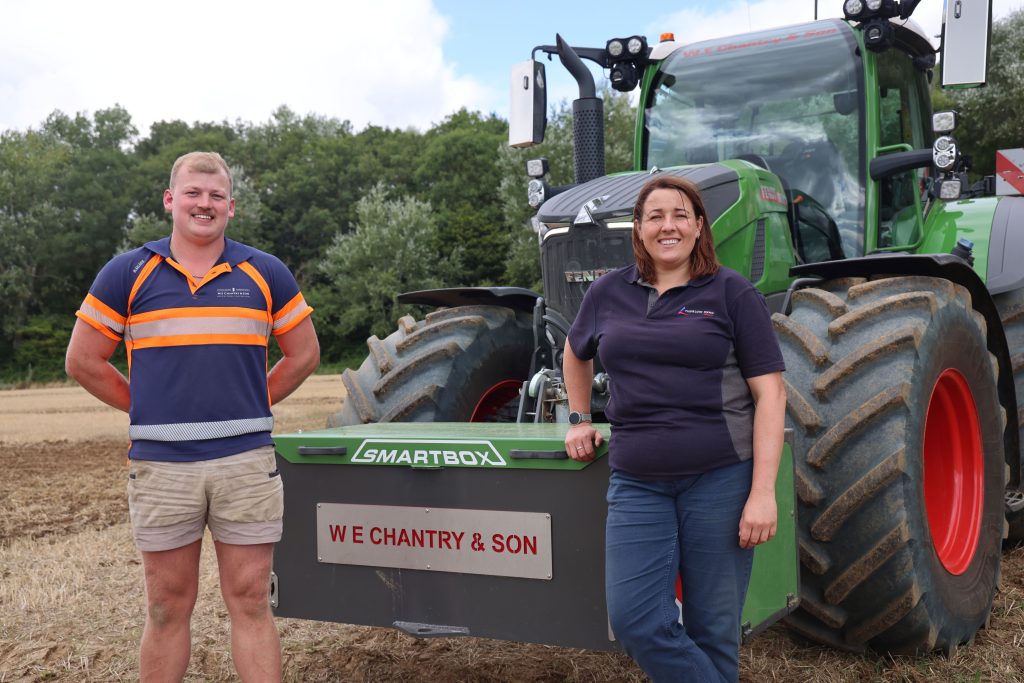
The main tractors include a 150hp model with a front loader, used mainly for grassland and light arable work, field loading and haulage, plus a new 260hp Fendt 726 Vario Gen 7.1, which arrived this May. Olly says the family remained loyal to one tractor brand for at least 25 years before buying its first Fendt in 2025, because the machines were reliable, performed well and were backed by strong dealer support. However, contracting work on customers’ farms gave him frequent opportunities to drive other makes, and Fendt tractors consistently stood out for their ease of use and operator comfort, and were always highly rated by their owners too.
Demonstration led to purchase
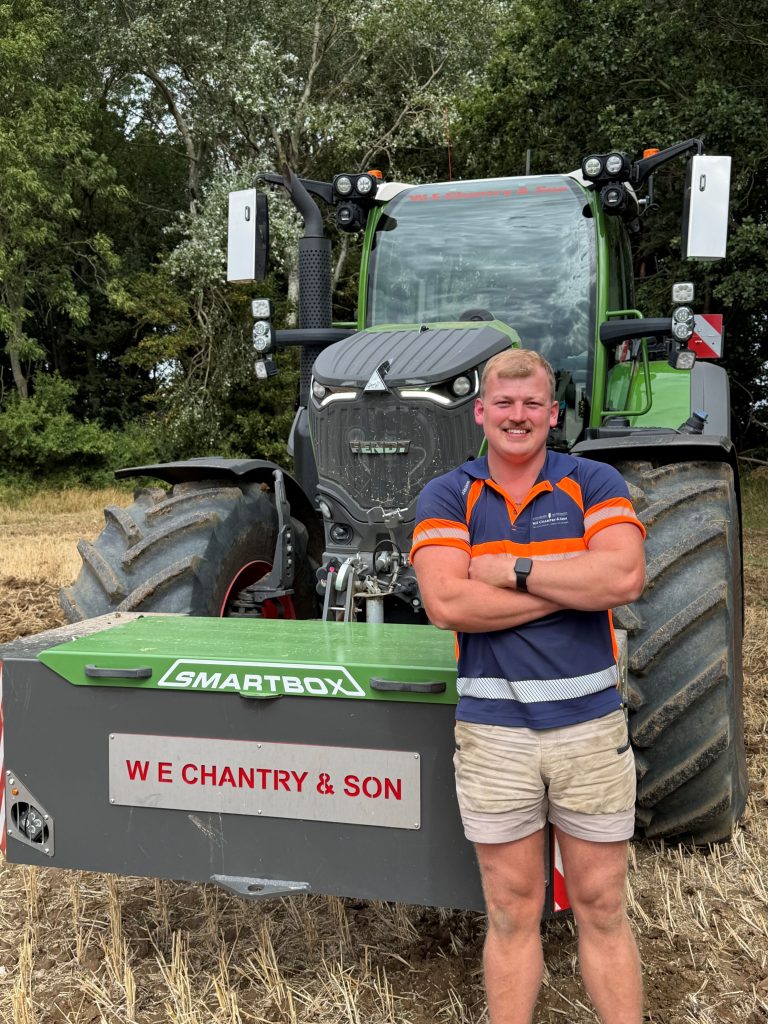
That view was reinforced in 2023 when the Chantry family was offered a demonstration of the new Fendt 728 Vario Gen 7.1. Working with a Cousins Patriot 3.0m combination cultivator it quickly impressed, especially the high level of comfort, low fuel consumption and latest FendtONE control concept.
Two years later, when one of their tractors was due for replacement, the Chantrys bought their first Fendt. This was a second-hand 2019 Fendt 724 Vario, supplied by TNS, and which operated until May this year before being part-exchanged for the new, larger and more powerful 726 Vario Gen 7.1. Olly says Helen Walker, who took on the Area Sales Manager role two years ago, and Regional Sales Manager, Ben Hockley were easy to deal with, understood their business needs and were keen to agree an acceptable package.
The 726 Vario is the second most powerful in the five model 700 Vario Gen 7.1 line-up. All models share the same low-revving engine design which provides strong torque across a wide speed range. Although 20hp of extra boost is available, this is delivered only when needed to drive ancillaries including the air conditioning, cooling and power steering systems, ensuring the rated 260hp of the Chantry’s 726 Vario is always available for productive work.
The VarioDrive transmission has a single, stepless operating range, so there is no need for the operator to stop and change working modes between travelling to the field and starting work. Power is distributed proportionately between the front and rear axles to maximise traction and optimise working efficiency. During turns, more power is delivered to the front wheels to pull the tractor in the steering direction, giving it a tight turning radius similar to much smaller tractors. “For a tractor of this size, the manoeuvrability is awesome, contributing to quick and easy headland turns,” explains Olly.
Wide variety of tasks
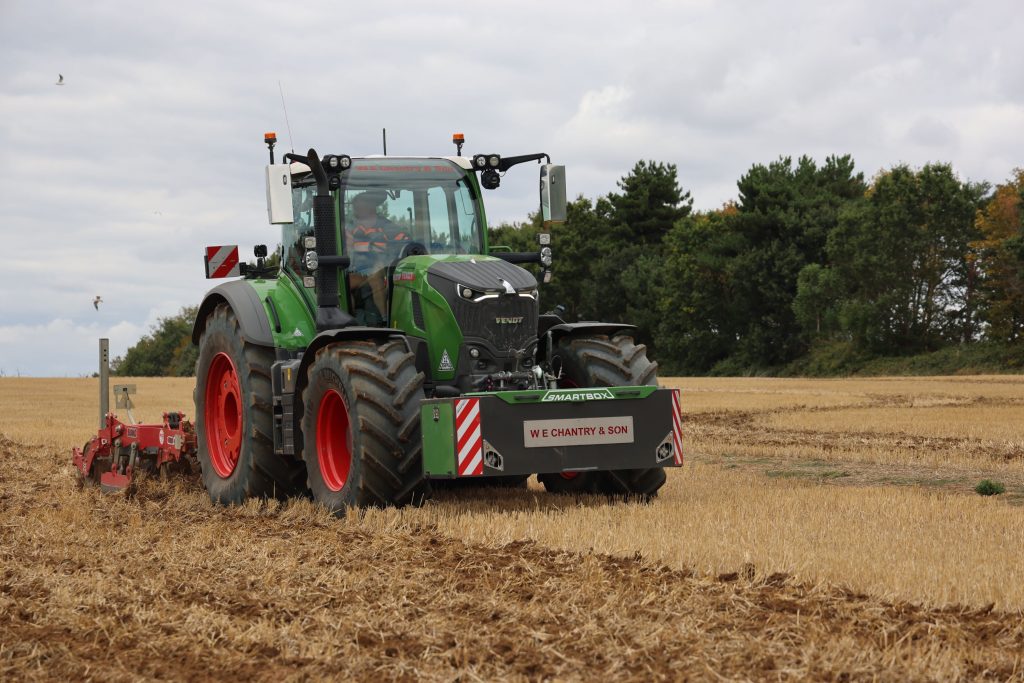
Although the new tractor did little work until mid-June, by late September it had already clocked up almost 900 hours. Jobs included transporting onions from the field in an 18t trailer, grain and bale carting, establishing oilseed rape with a 7m Horsch Pronto drill, mole draining, ploughing with six- and seven-furrow ploughs, pulling a 4.5m Simba Cultipress and carrying out primary cultivations with a six-leg Sumo Trio.
Olly says the single-leg mole plough is pulled with negligible wheelslip at 3.5–4.0kph, while the Cultipress is handled comfortably at 10–12kph. With the Sumo Trio working at a maximum depth of 12–14in on undulating ground including steep slopes, the Fendt maintains 8kph without difficulty while engine revs adjust between 1,230 and 1,500rpm to supply the power required, achieving impressively low average fuel consumption of just 15 litres/ha. During onion carting, one tank of diesel lasted four working days.
Flexible ballasting
The Fendt 726 Vario weighs 9.5t unladen, but 1.4t of front ballast and 600kg rear wheel weights are added for heavy cultivations, giving a total operating weight of approximately 12t. “We could add more, but we specified Michelin 710/70R42 rear tyres and 600/70R30s at the front, and this set-up works well,” Olly confirms. “With Fendt VarioGrip central tyre inflation I could achieve even better performance, but this tractor was a dealer stock machine and didn’t have it fitted. However, I’m convinced that specifying it when we come to change the tractor would be a worthwhile investment.”
Impressive work rates are partly due to the Fendt’s ability to transfer power efficiently to the ground, but also because of what Olly describes as its “incredible” manoeuvrability. “There is less shunting, we keep moving forward and less time is wasted. Even working in ‘lands’ with GPS guidance, it boosts efficiency. Watching the tyres when manoeuvring it’s obvious there is little scrubbing, which should maximise tyre working life too.”
Practical for lighter work too
The 726 Vario was bought with an expected annual workload of about 1,500 hours, but its versatility could push that closer to 2,000 hours as it takes over some lighter duties from the smaller tractor.
Previously, approximately 500 hours of vegetable and root crop spot spraying was allocated to the more compact 150hp tractor because of its ability to turn tighter on headlands but Olly says that as the Fendt’s manoeuvrability is even better, the family is considering investing in a set of narrow wheels for the 726 Vario allowing it to take on that spraying role too. “The low fuel consumption and better working environment would be additional advantages,” he suggests.
Comfortable working environment
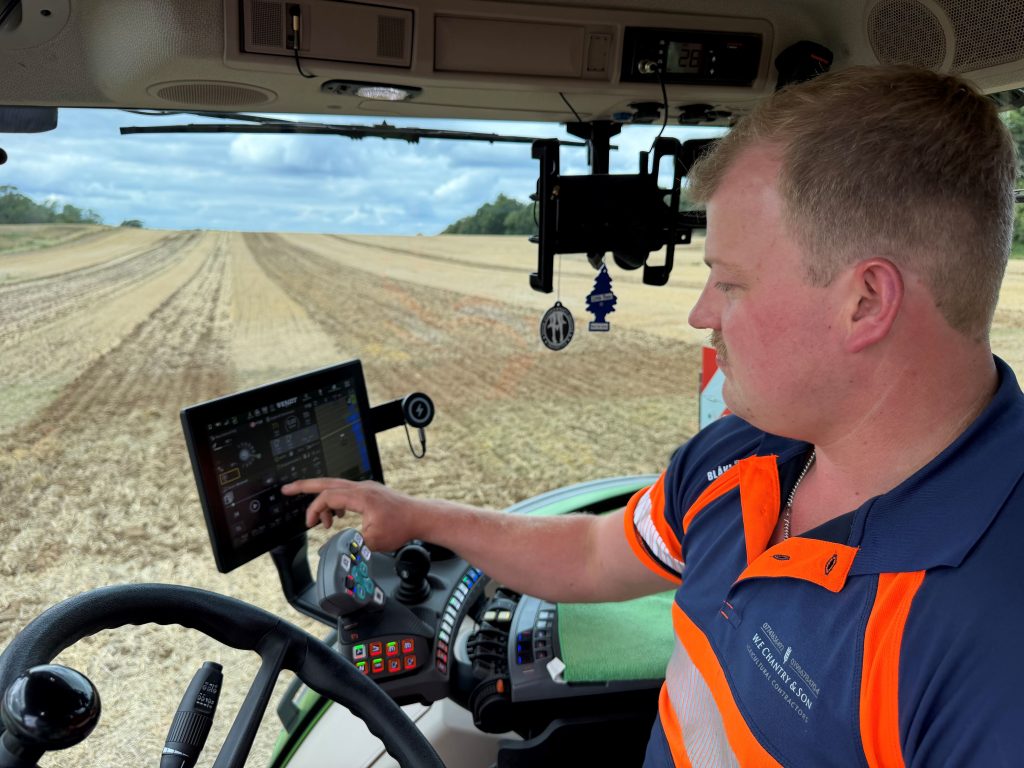
The cab is quiet and spacious, with excellent all-round visibility and powerful work lights. There is plenty of storage for odds and ends, plus a cooled compartment for food and drinks. The seat rotates to the right, making it easier to monitor rear-mounted implements, although Olly points out that a few extra degrees of rotation would make it even better.
The FendtONE operating concept is proving user-friendly and tractor systems and settings are easily optimised for every task. “I especially like the flexibility of the headland management system,” he continues. “Although the engine quickly responds to varying loads, for heavy draft applications I set the TMS to increase revs as the implement is lowered into work after each headland turn. With the engine already set up to provide the extra power as the draft load increases, operation is smoother, my pre-set travel speed is maintained, and higher work rates are achieved.
“It’s also useful being able to set the differential lock to disengage automatically during each headland turn. “In wet, slippery conditions we activate the diff lock for maximum traction, then can rely on the system to disengage and engage it again during each turn. It’s one less thing to think about and do,” he says.”
Reliable back-up
Support from the TNS team has proved excellent, although the 726 Vario has been problem-free since it arrived. “We all like it and the performance is even better than expected so when the time comes to update our smaller tractor, we will ask TNS to quote for a second Fendt,” Olly confirms. “Although initially other brands often appear cheaper, by the time options are added to bring them up to the Fendt’s standard specification, then the difference in price becomes less significant. Fendt tractors also hold their value well, so when the lower fuel consumption, higher work rates, comfortable working environment and reassuring back-up from TNS are all considered too, the brand is a sensible choice.”